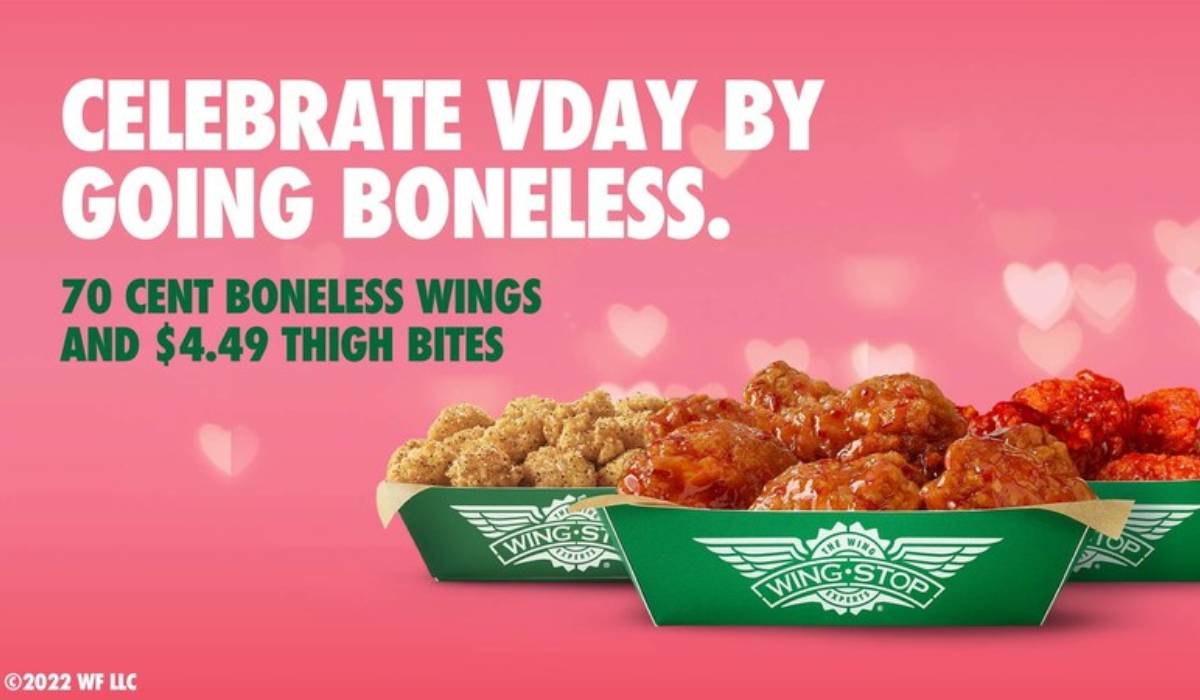
You’re hungry. It’s Tuesday. You walk into your local sports bar expecting that glorious, sticky, mountain of breaded chicken for less than a buck a piece, only to find the sign says "Market Price" or, even worse, the deal is gone entirely. It hurts. Honestly, the 70 cents boneless wings era felt like a fever dream of affordable protein that we all took for granted until the supply chain decided to wake us up.
Cheap wings. That was the promise.
But if you look at a menu today, that 70-cent price point feels like a relic from a different decade, even though it was standard just a few years ago. There’s a weirdly complex web of logistics, bird flu outbreaks, and the sheer physics of "white meat" demand that explains why your favorite wing joint is suddenly charging you $1.25 for something that isn't even technically a wing.
The Great 70 Cents Boneless Wings Disappearing Act
Let’s get one thing straight: boneless wings aren't wings. You probably know this, but it bears repeating because it dictates the price. They are breast meat. Specifically, they are pieces of chicken breast cut up, breaded, fried, and tossed in sauce. Because they are white meat, their price is tied to the massive commodity market for chicken breasts, not the volatile market for "flats and drums."
Back in 2019 and early 2020, chicken breast prices were at historic lows. Restaurants could easily offer 70 cents boneless wings and still make a killing on the beer you drank while eating them. It’s the "loss leader" strategy. You come for the cheap chicken; they make their rent on the $7 IPA.
Then everything broke.
Between 2021 and 2024, the United States saw record-breaking Highly Pathogenic Avian Influenza (HPAI) outbreaks. We’re talking about tens of millions of birds being culled. When supply drops that sharply, the 70-cent price point becomes a mathematical impossibility for a small business owner. If a restaurant is paying $2.50 a pound for breast meat, and you factor in the cost of flour, oil (which doubled in price for a while), labor, and those little plastic cups of ranch, they’re actually losing money on every order.
Why Buffalo Wild Wings and Applebee’s Changed the Game
You might remember the B-Dubs "Wing Tuesdays" and "Boneless Thursdays." These weren't just promotions; they were cultural touchstones for college kids and broke families. Buffalo Wild Wings basically built a kingdom on the back of the boneless wing. But in their recent earnings calls, parent company Inspire Brands has had to navigate a landscape where poultry costs swing by 40% in a single quarter.
They didn't just raise prices. They pivoted.
Instead of a flat 70 cents boneless wings deal, many franchises moved to "Buy One, Get One" (BOGO) models. Why? Because it sounds better to get "free" food than to pay a low price that slowly creeps up to 85 cents, then 90 cents, then a dollar. It’s psychological.
Applebee’s did something similar. They’ve leaned heavily into the "Dollaritas" and "2 for $20" style deals, but the boneless wing has become more of a seasonal weapon. When breast prices are low, the 70-cent or 50-cent deals reappear as "limited time offers" to juice foot traffic. When prices spike, the deals vanish faster than a side of celery.
The Secret Economics of the "Nugget"
People get snobby about boneless wings. They call them glorified nuggets. Kinda true, honestly. But from a business perspective, the boneless wing saved the casual dining industry during the Great Wing Shortage of 2021.
Traditional bone-in wings are hard to produce. A chicken only has two. If the world wants more wings, you have to raise more chickens, which leaves you with a massive surplus of breasts and thighs that nobody wants to pay a premium for. This imbalance is why bone-in wings reached nearly $4.00 per pound at the wholesale level a couple of years back.
Boneless wings solved the "carcass imbalance."
By convincing us that breaded breast meat was a "wing," the industry found a way to move the most plentiful part of the bird. But now, even that "plentiful" part is expensive. Labor costs for processing those breasts—cutting, trimming, and breading—have skyrocketed. You can't find a 70-cent wing if the person frying it is (rightfully) making $16 an hour and the oil they’re fried in costs $50 a jug.
The Real Cost Breakdown (Rough Estimate)
- The Meat: 25–35 cents per piece.
- Breading and Oil: 5–10 cents.
- The Sauce (especially butter-based Buffalo): 8–12 cents.
- Labor and Overhead: 15–20 cents.
- The Ranch/Blue Cheese: 10 cents (don't underestimate the cost of dairy!).
Add that up. You're already at 63 to 87 cents per wing before the owner even thinks about profit. Selling them for 70 cents is charity.
Where to Actually Find 70 Cents Boneless Wings Now
If you are determined to find this price point, you have to look away from the national chains. Most "Big Wing" corporations have moved to dynamic pricing. However, regional spots and "dive" bars still use them as a hook.
- Local "Townie" Bars: These places often own their buildings and have lower overhead. They might still run a 70-cent Wednesday because they know you’ll buy three pitchers of Miller Lite.
- Pizza Chain Add-ons: Places like Domino’s or Papa Johns often have better margins on wings because they are "sides." They use them to increase the total ticket value of a pizza order.
- The "Ghost Kitchen" Loophole: Brands like It’s Just Wings (owned by Chili’s) or Cosmic Wings (Applebee’s) sometimes run aggressive digital-only promos on DoorDash or UberEats to capture the late-night crowd.
Don't expect the quality to be world-class at that price. At 70 cents, you’re likely getting a "pre-processed" fritter rather than a hand-breaded piece of whole-muscle breast meat.
Is the 70-Cent Deal Dead?
Not dead, but definitely on life support.
We are seeing a shift toward "Thirsty Thursdays" or "Wing Nights" where the price is irrelevant because the experience is the draw. The 70 cents boneless wings price point has become a "teaser" rate. It gets you in the door, but by the time you add a soda, a side of fries (which have an insane profit margin), and a dipping sauce that costs an extra 50 cents, the restaurant has made its money back.
Also, keep an eye on "thigh meat" wings. Some chains have started using boneless thighs because the meat is cheaper and stays juicier. If you see a "boneless wing" that feels a bit more tender or fatty, you're likely eating a thigh. Honestly? It's better.
How to Maximize Your Wing Budget
Stop ordering delivery. Seriously.
If you're hunting for 70 cents boneless wings, the delivery fees will absolutely kill the deal. A "70-cent" wing becomes a $1.50 wing once you add the small order fee, the delivery fee, the service fee, and the tip. If you want the deal, you have to go to the bar.
Sit at the counter. Order the special. Drink water if you're being cheap, but at least tip the server on what the "real" price of the food should have been.
Another pro tip: check the "lunch specials." Many places like Zaxby’s or Wingstop have midday bundles that effectively bring the price per wing down to that 70-80 cent range when you factor in the included drink and fries.
Actionable Steps for the Hungry
If you’re staring at a menu right now and feeling the sticker shock, here is how you handle the "post-70-cent" world:
- Download the Apps: It’s annoying, but Buffalo Wild Wings and Wingstop save their best "boneless" pricing for app users. They want your data, and they'll give you 10 free wings to get it.
- Verify the Day: Most 70-cent deals are strictly Tuesday or Thursday. Don't show up on a Monday and argue with the teenager behind the counter.
- Look for "Value Boxes": Grocery store delis (like Publix or Kroger) often sell breaded boneless wings by the pound. If you do the math, a $10 bucket usually works out to about 45–55 cents per wing. You just have to provide your own atmosphere and beer.
- Ask About "Naked" Boneless: Some places charge more for heavy breading. If they have a grilled "boneless" option, it’s often healthier and sometimes stays at a lower price point because it uses less labor in the kitchen.
The era of the "unlimited cheap wing" might be closing as global food prices stabilize at a higher floor, but the 70 cents boneless wings deal will always exist as a ghost in the machine—a way for bars to remind you that they’re still the best place to spend a Tuesday night.