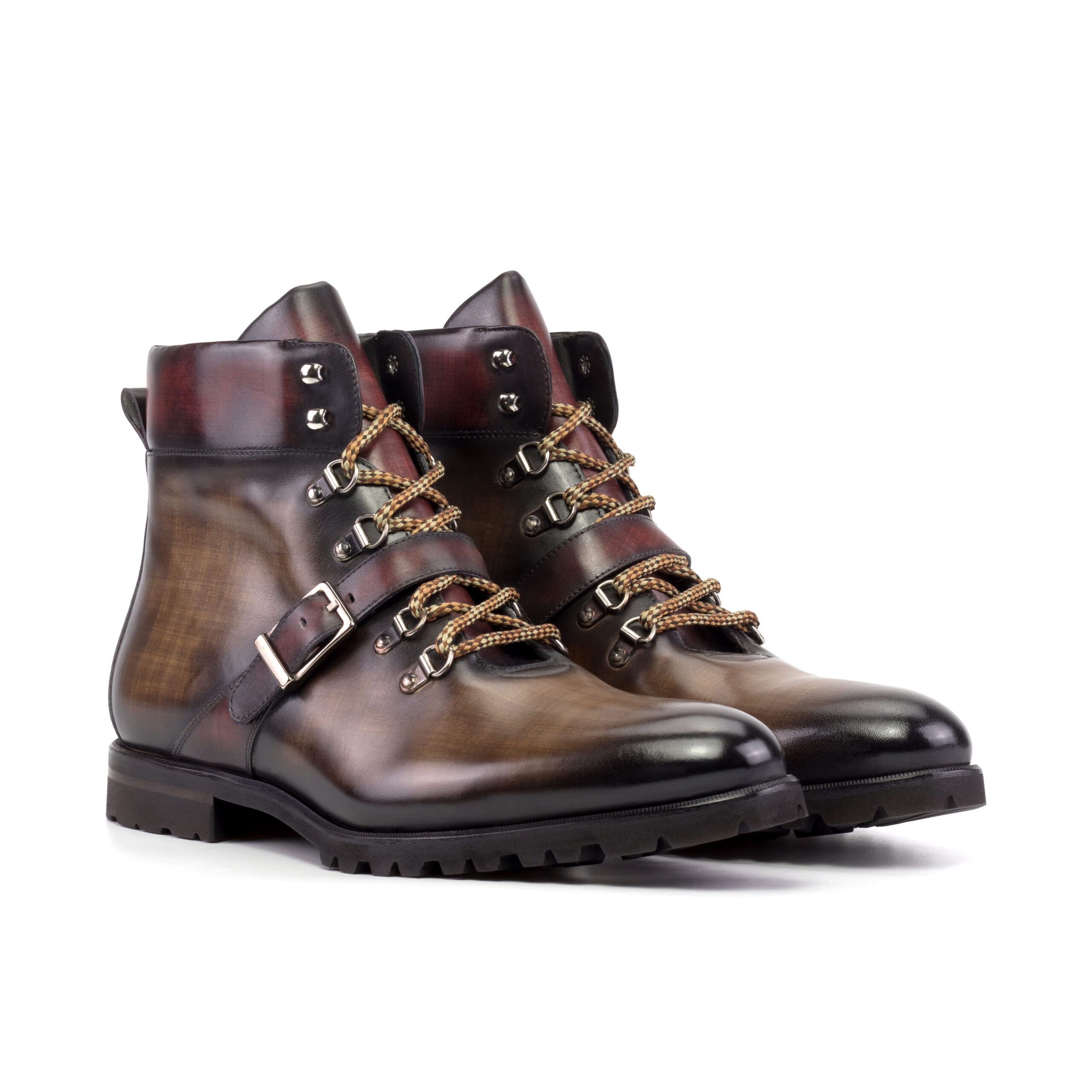
You’re standing in a gear shop, staring at a wall of neon-colored synthetic shoes that look like they belong in a sci-fi movie. It's overwhelming. But then, your eye catches that one pair of dark, rugged leather. Brown hiking boots for men have been the gold standard for a century, and honestly, they aren't going anywhere. There’s a reason your grandfather wore them and why top-tier mountaineers still reach for them when things get serious. They just work.
They aren't just about the "heritage" aesthetic or looking like you're about to chop wood in the Pacific Northwest. Leather is a powerhouse. It's resilient.
Did you know that a high-quality pair of full-grain leather boots can actually outlast three or four pairs of those fancy "breathable" mesh hikers? It's true. While synthetic fabrics tear on sharp granite or melt near a campfire, a solid cowhide upper just takes a scratch and keeps moving.
The Real Difference Between Full-Grain and Nubuck
Most guys think "brown" is just a color. It's not. In the world of brown hiking boots for men, the type of leather tells you exactly how the boot will behave on a 15-mile trek through the Sierras.
Full-grain leather is the heavy hitter. It's the entire outer layer of the hide. This stuff is naturally water-resistant and incredibly tough. If you’re planning on off-trail scrambling or hauling a 50-pound pack, this is your best friend. But, there's a catch. They’re heavy. Your legs will feel it by mile ten if you aren't conditioned. Brands like Danner and Zamberlan have mastered this, but be prepared for a break-in period that might involve some moleskin and a few swears.
Then there's nubuck. It’s been buffed to look like suede. It’s softer out of the box.
You’ll see this a lot in mid-range boots from Lowa or Vasque. It’s lighter than full-grain but still tougher than mesh. If you're a weekend warrior who hits well-maintained trails, nubuck is probably your sweet spot. It breathes a bit better than heavy hide, but you’ll need to be more diligent with the waterproofing spray.
Why the "Old School" Look is Actually a Performance Feature
People often mistake the classic brown boot for being "outdated" technology. That’s a mistake.
Think about the Vibram sole. Almost every premium brown hiking boot uses some variation of it. The lugs are designed specifically to shed mud so you don't end up walking on two slick bricks of clay. Leather also has this incredible "memory" property. Over time, the heat from your feet actually molds the leather to your specific bone structure. A synthetic boot will never do that; it’s the same shape on day one as it is on day 500.
A leather boot is essentially a custom-molded orthotic if you wear it long enough.
Waterproofing: The Gore-Tex Myth
Here’s something most gear reviewers won’t tell you: you might not actually need a Gore-Tex liner in your brown hiking boots for men.
Wait. Don’t close the tab yet.
If you’re hiking in the high desert or the middle of a humid summer in the Appalachians, a waterproof membrane is basically a plastic bag for your foot. It traps sweat. Once your socks are wet from the inside, you're looking at a one-way ticket to Blister Town.
If you buy a high-quality leather boot and treat it with Nikwax or Sno-Seal, the leather itself becomes the barrier. It’s naturally water-repellent. For deep winter or Pacific Northwest slush? Sure, get the Gore-Tex. But for everything else? Simple leather is often more breathable and just as effective at keeping the creek out.
The Weight Penalty is Real But Worth It
Let’s be real for a second. Leather boots are heavy.
A pair of Asolo TPS 520 GV boots weighs about 3.5 pounds. Compare that to a modern trail runner that weighs 12 ounces. That weight is "static weight" on your feet, which consumes more energy than weight in your pack.
So why do it?
Stability. If you’ve ever rolled an ankle on a loose talus slope, you know that a high-top brown boot is like a physical insurance policy. It locks your heel in place. It protects your malleolus (that bony bump on your ankle) from getting smashed against rocks. When you’re tired at the end of a long day, that extra support keeps your form from collapsing.
Maintaining Your Investment
You can't just throw these in a closet and forget about them. Leather is skin. It dries out. It cracks.
If you want your brown hiking boots for men to last a decade—and they really can—you have to clean them.
- Use a stiff brush to get the grit out of the seams. Salt and dirt act like sandpaper on the stitching.
- Use a damp cloth to wipe them down.
- Apply a conditioner every few months.
If the leather starts looking "thirsty" or light in color, it's time for some oil. But don't overdo it! Too much oil makes the leather too soft, and you’ll lose that support we talked about earlier.
The Environmental Angle Nobody Mentions
We talk a lot about "sustainability" in fashion. Most synthetic hiking shoes are made of petroleum-based plastics and glues that can’t be repaired. When the sole wears down or the mesh rips, they go in the landfill.
Many high-end brown leather boots are resoleable.
This is huge.
When you wear the tread down to nothing, you can send them to a cobbler. They’ll rip off the old Vibram, glue on a fresh one, and you’re good for another five years. You're keeping plastic out of the ocean and keeping your favorite, perfectly-broken-in boots on your feet. It’s the ultimate "buy once, cry once" philosophy.
Common Misconceptions About Fit
"Buy a size up for thick socks."
Actually, don't do that. Modern sock technology (shout out to Darn Tough and Smartwool) means you can get incredible cushioning without the bulk of three pairs of wool socks. Your boots should fit snug but not tight. You want about a thumb's width of space between your toes and the front of the boot when you're standing.
If your heel lifts even a little bit when you walk, you're going to get a blister. Period.
Try them on at the end of the day. Your feet swell naturally as you walk, sometimes up to half a size. If a boot feels tight in the store at 10:00 AM, it's going to be a torture chamber by 3:00 PM on the trail.
Brown Boots in the 21st Century
Are they the fastest? No.
Are they the lightest? Definitely not.
But brown hiking boots for men represent a certain level of preparedness. They tell the trail that you’re not just passing through; you’re equipped for whatever it throws at you. Whether it’s the Scarpa SL Active for serious mountaineering or the Timberland White Ledge for a casual stroll in the woods, the color brown remains the icon of the outdoors for a reason.
Taking the Next Steps
If you’re ready to move away from disposable footwear and into something that actually gets better with age, start by assessing your typical terrain.
If you spend most of your time on gravel paths, look for a "mid-height" nubuck boot. It offers a balance of weight and protection. For those planning a multi-day trek or dealing with snowy conditions, look for a one-piece full-grain leather construction. Check the tongue of the boot—it should be "gusseted," meaning it's attached to the sides so water can't sneak in through the lace holes.
Finally, invest in a dedicated leather cleaner and a horsehair brush. Applying a light coat of conditioner before your first big trip will help soften the leather and start that crucial break-in process. Your feet will thank you around mile eight.